TECNIS PureSee IOL clinical data took center stage at the 2026 American Society of Cataract and Refractive Surgery (ASCRS) annual meeting, as Johnson & Johnson Vision presented compelling new evidence regarding its latest intraocular lens. The data highlights a significant leap forward in refractive technology, offering patients a purely refractive, non-diffractive design that delivers a continuous range of vision.
TECNIS PureSee IOL Delivers Unmatched Contrast Sensitivity
One of the primary concerns for patients undergoing cataract surgery is the potential loss of contrast sensitivity often associated with multifocal lenses. However, the latest study on the TECNIS PureSee IOL demonstrates that this lens provides a contrast sensitivity profile comparable to a monofocal lens. This ensures that patients can enjoy high-quality vision even in low-light conditions, such as driving at night or reading in a dimly lit room.
The presentation at ASCRS 2026 revealed that the TECNIS PureSee IOL maintains excellent image quality across all lighting environments. By utilizing a unique purely refractive design, the lens avoids the “rings” often found in diffractive IOLs, which can cause glare and halos.
Read More: Johnson & Johnson Announces $2 Billion Investment in North Carolina Manufacturing Facility

Extending the Range of Vision with TECNIS PureSee IOL Technology
The core benefit of the TECNIS PureSee IOL is its ability to provide an extended range of vision. Unlike traditional lenses that focus solely on distance, this innovative technology allows for high-quality distance and intermediate vision, with functional near vision. This reduces the dependency on glasses for daily tasks like using a smartphone or working on a computer.
Patient Satisfaction and Clinical Reliability
During the ASCRS sessions, lead investigators shared that patients implanted with the TECNIS PureSee IOL reported high levels of satisfaction. The “easy-to-fit” nature of the lens also makes it a preferred choice for surgeons, as it is more forgiving regarding slight misalignments compared to complex diffractive designs.
The TECNIS PureSee IOL represents a shift in how we approach presbyopia-correcting surgery,
We are providing the range of vision patients desire without the visual trade-offs they fear.
Spokesperson for Johnson & Johnson
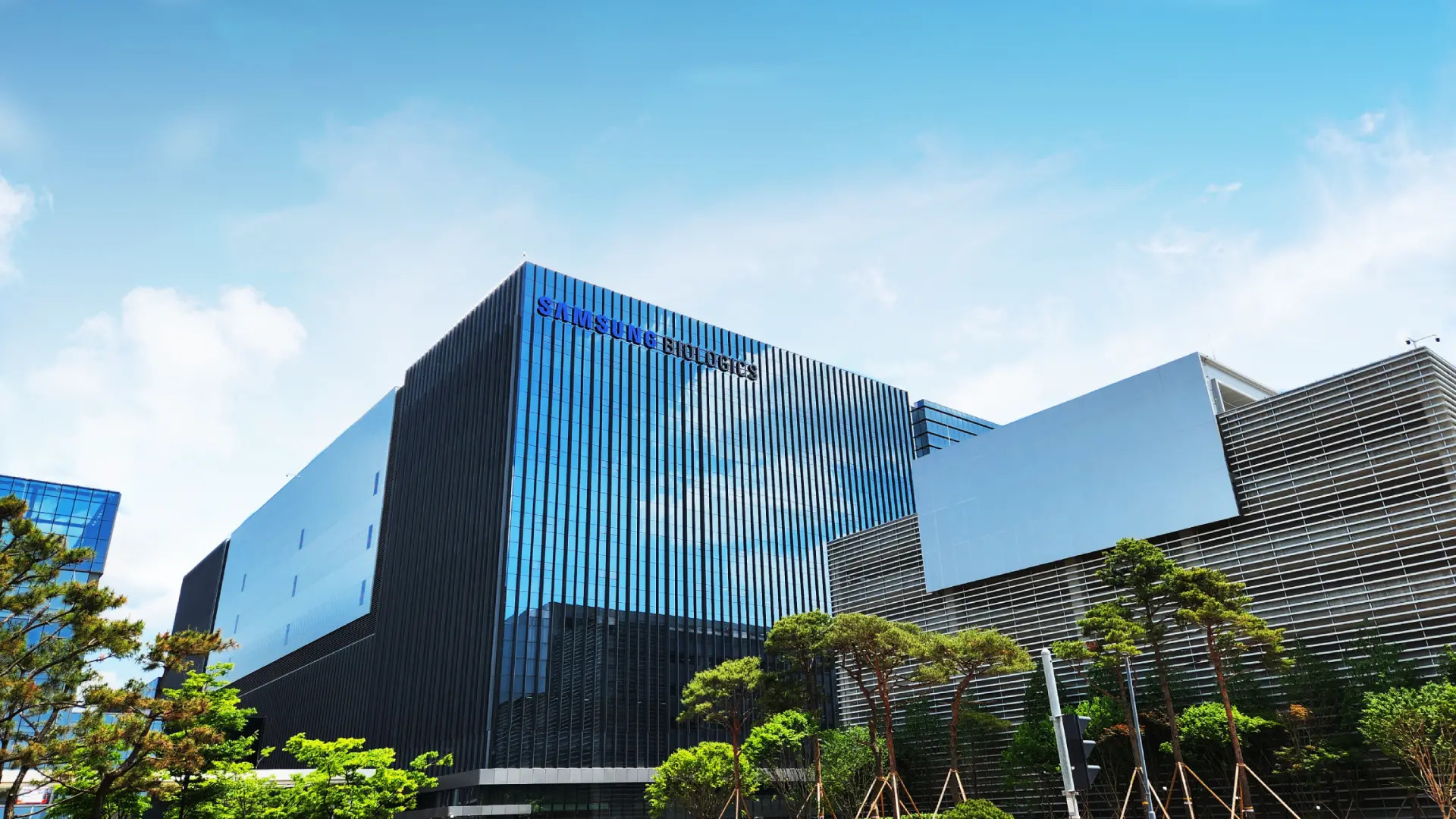
Samsung Biologics Q3 2026 Results: Plant 5 Ramp-Up and Rockville Lift Revenue to KRW 1,490 Billion as 2026 Guidance Rises to 20%
Samsung Biologics Q3 2026 Results show revenue of KRW 1,490 billion and operating profit of KRW 640 billion. Plant 5 ramp-up and the Rockville site […]

Amgen and AstraZeneca Report TEZSPIRE Eosinophilic Esophagitis Phase 3 CROSSING Results
TEZSPIRE Eosinophilic Esophagitis results from the Phase 3 CROSSING trial show histologic remission and dysphagia improvement at week 24, sustained through week 52, Amgen and […]
Merck KGaA Announces Silence Therapeutics Acquisition to Add Divesiran siRNA Therapy to Rare Disease Pipeline
The Silence Therapeutics acquisition gives Merck KGaA, Darmstadt, Germany, the Phase 3-ready siRNA therapy Divesiran for polycythemia vera. The deal carries a $1.1 billion enterprise […]
Clinical Outcomes: TECNIS PureSee IOL Performance
The following data is compiled from a real-world, post-market observation study (N=293) and a U.S. prospective, randomized clinical trial (N=200) featured at the 2026 conference.
| Metric | Clinical Result (Mean/Percentage) | Notes vs. Monofocal Control |
| Binocular Uncorrected Distance (UVA) | 20/19 | Comparable to monofocal |
| Binocular Best-Corrected Distance | 20/18 | Equivalent high-quality distance |
| Intermediate Visual Acuity (UIVA) | 20/26 to 20/28 | Significantly improved vs. control |
| Near Visual Acuity Improvement | +1.5 lines (gain) | Greater functional near vision |
| Contrast Sensitivity | ≤ 0.3 log units difference | Comparable to aspheric monofocal |
| Spectacle Independence (Distance) | 96% | High independence |
| Spectacle Independence (Intermediate) | 95% | Excellent for computer/dashboards |
| Spectacle Independence (Near) | 61% | Functional; may need light reading aids |
| No “Very Bothersome” Halo | 93% | Monofocal-like disturbance profile |
| No “Very Bothersome” Glare | 91% | Highly refractive, non-diffractive |
| Overall Patient Satisfaction | 97% | 97% would recommend to others |