Pfizer’s HYMPAVZI™ Shows Strong Efficacy in Late-Stage Hemophilia Trial

Pfizer announces its hemophilia drug HYMPAVZI™ significantly reduced annualized bleeding rates in its Phase 3 BASIS study for patients with inhibitors.
Pfizer announces its hemophilia drug HYMPAVZI™ significantly reduced annualized bleeding rates in its Phase 3 BASIS study for patients with inhibitors.

Amgen presented Phase 2 data showing that its investigational obesity therapy, maritide, administered monthly, led to significant weight loss in adults with obesity or overweight. The treatment was generally well tolerated, supporting further clinical development.

Eli Lilly’s once-weekly insulin, efsitora alfa, has shown promising results in Phase 3 clinical trials. The innovative treatment demonstrated A1C reductions comparable to daily basal insulins, with a consistent safety profile.
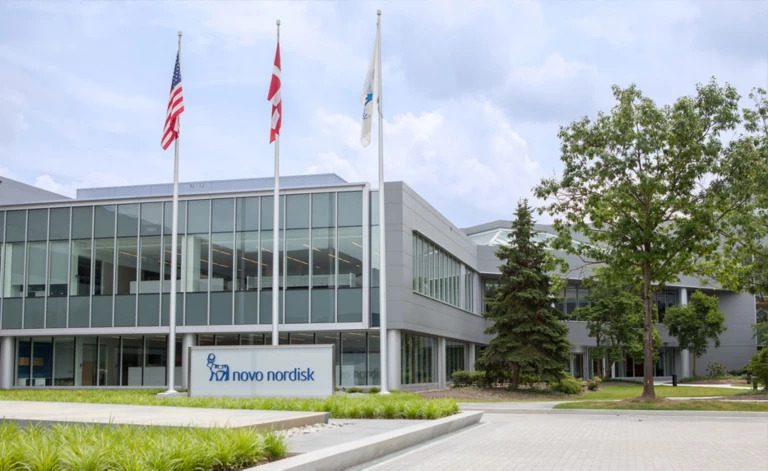
Novo Nordisk has announced compelling results from its phase 3b STEP UP clinical trial, demonstrating that a higher 7.2 mg dose of its weight-loss medication, Wegovy® (semaglutide), led to a significant average weight loss of 21% in adults with obesity.

AbbVie reported strong results from a Phase 3 head-to-head trial, showing that atogepant (as QULIPTA®/AQUIPTA®) was superior to topiramate on all primary and secondary measures [Read More…]

Eyestem’s new cell therapy for Dry AMD, showing promising safety and vision improvement in Phase 1 trials. A new hope for treating geographic atrophy.

Swiss healthcare giant Roche is advancing prasinezumab, a potential first-in-class anti-alpha-synuclein antibody for early Parkinson’s disease, into Phase III trials. This decision follows encouraging data from the Phase IIb PADOVA study and its long-term follow-up, suggesting the drug offers clinical benefits.

In a breakthrough for oncology, Johnson & Johnson has announced promising early results from a Phase 1b clinical trial for its second-generation CAR T-cell therapy, [Read More…]
Johnson & Johnson reported encouraging new results from a Phase 1b trial that found its experimental oral medicine, bleximenib, given with the routine treatment regimen [Read More…]
Novo Nordisk keeps pushing the boundaries of obesity innovation by revealing the whole Phase 3 REDEFINE 1 and 2 trial data, which shed light on CagriSema’s revolutionary potential.