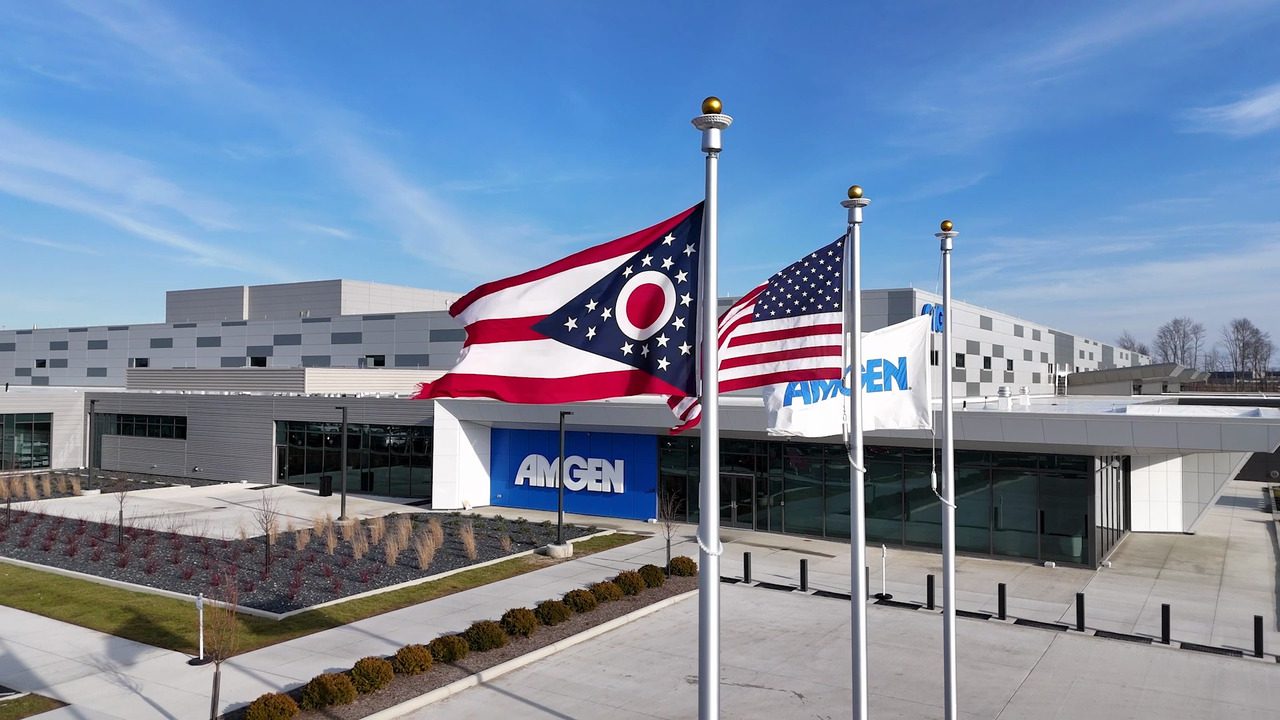
Amgen (NASDAQ: AMGN) today announced that the U.S. Food and Drug Administration (FDA) has approved UPLIZNA® (inebilizumab-cdon) for the treatment of adult patients with generalized myasthenia gravis (gMG) who are anti-acetylcholine receptor (AChR) or anti-muscle-specific tyrosine kinase (MuSK) antibody positive. This approval introduces a new targeted treatment option that provides patients with the potential for long-term disease control via a convenient dosing schedule of just two maintenance doses per year, following two initial loading doses.
Generalized myasthenia gravis is a rare, chronic, and unpredictable B-cell-mediated autoimmune disorder that leads to debilitating, fluctuating muscle weakness.
UPLIZNA works by causing targeted and sustained depletion of CD19-positive B cells, including plasmablasts and some plasma cells, which are believed to produce the autoantibodies (AChR and MuSK) that drive the disease.
This approval marks a significant advancement for people living with gMG,
By selectively targeting CD19-positive B cells, UPLIZNA offers a new approach to treatment that addresses a biological root cause of disease. UPLIZNA is conveniently dosed twice a year and delivers durable efficacy, helping people manage debilitating symptoms that can compromise daily function including trouble breathing, speaking and seeing.
Jay Bradner

Read More: U.S. FDA Approved Amgen’s UPLIZNA® (INEBILIZUMAB-CDON) for the Treatment of Rare Immune Disorder
Supported by Phase 3 MINT Trial Data
The FDA approval is supported by data from the Myasthenia Gravis Inebilizumab Trial (MINT), the largest Phase 3 biologic study to include both AChR+ and MuSK+ patients.
At Week 26, UPLIZNA demonstrated strong efficacy, showing a statistically significant 1.9-point difference in the Myasthenia Gravis Activities of Daily Living (MG-ADL) score compared with placebo (-4.2 vs. -2.2; p<0.0001) in the combined study population. Benefits for the AChR+ patient subgroup continued to improve through Week 52.

The MINT trial was also the first Phase 3 study in gMG to successfully incorporate a steroid taper into its protocol, recognizing the burden of long-term steroid use.
The most common adverse reactions reported in the gMG trial were headache and infusion-related reactions.

MSD Oncology Pipeline Advances With First Phase 3 Data for Intismeran Autogene Plus KEYTRUDA and Sacituzumab Tirumotecan
The Merck oncology pipeline will present first-time Phase 3 results for intismeran autogene plus KEYTRUDA, sacituzumab tirumotecan and KEYTRUDA monotherapy in Madrid from Oct. 23-27, […]



This gMG approval marks the third indication for UPLIZNA, which was previously approved for neuromyelitis optica spectrum disorder (NMOSD) in 2020 and Immunoglobulin G4-related disease (IgG4-RD) in 2025. Amgen is committed to supporting patient access to UPLIZNA and encourages patients and caregivers to contact the Amgen By Your Side program for support and resources.
Last Modified: