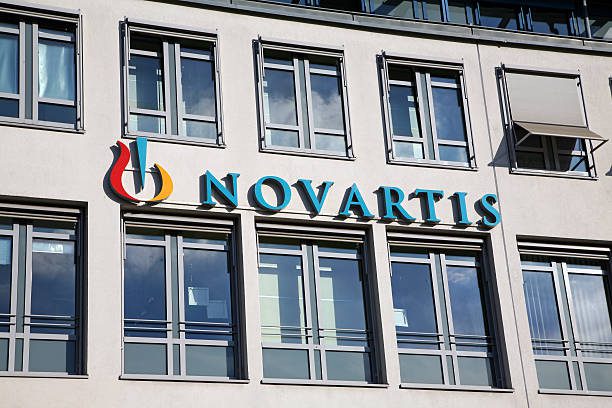
Novartis Q3 2026 results, declared on October 27, 2026 from Basel, show net sales of USD 14.5 billion, up 4% in both constant currencies and US dollars. Core operating income was USD 6.0 billion, up 11% in dollars. The Swiss drugmaker raised its 2026 guidance for core operating income, which it now expects to be in line to grow low single-digit. Its previous outlook was a low single-digit decline.
Chief executive Vas Narasimhan said priority brands and launches more than offset generic erosion, “demonstrating the replacement power of the business.” He added that productivity efforts supported bottom-line performance and the guidance upgrade. He also said the company remains on track to deliver its mid- and long-term outlook. Net sales guidance is unchanged at low single-digit growth.
The reported side of the Novartis Q3 2026 results looks very different from the core view. Operating income fell 59% in dollars to USD 1.8 billion. The main cause was a USD 1.9 billion partial impairment of the del-desiran in-process R&D asset, along with higher other expense. Net income fell 70% to USD 1.2 billion, and EPS was USD 0.63.
Novartis Q3 2026 Results: Core Margin Expands to 41.6% While Reported Income Falls
Core operating income margin reached 41.6% of net sales. That is a gain of 2.3 percentage points in dollars and 2.0 points in constant currencies. Novartis attributed the core profit increase mainly to higher net sales. The 4% sales growth combined a 14-percentage-point contribution from volume with a 9-point drag from generic competition. Pricing had a negative 1-point effect, and currency had no impact.
Core net income rose 8% to USD 4.7 billion, or 6% in constant currencies. Higher core operating income drove the gain, partly offset by higher interest expense. Core EPS climbed 9% to USD 2.46, helped by a lower weighted average share count. Free cash flow was USD 5.1 billion, down 18%, because net cash flows from operating activities declined.
Nine-month figures put the quarter in context. Net sales reached USD 42.0 billion, flat in constant currencies and up 2% in dollars. Core operating income was USD 16.9 billion, down 2% in constant currencies, and the nine-month core margin was 40.1%. Within the Novartis Q3 2026 results, the third quarter therefore stands out as stronger than the year-to-date picture. Nine-month operating income was USD 10.8 billion, down 23%.
Novartis Q3 2026 Results: Kisqali, Kesimpta, Scemblix and Leqvio Drive Priority Brand Growth
Kisqali generated USD 1,821 million, up 37% in constant currencies. Novartis said growth was strong across all regions, with market share gains in early breast cancer and leadership in metastatic breast cancer. Kesimpta delivered USD 1,484 million, up 22%, on increased demand and broad access. Cosentyx remained the largest brand at USD 1,857 million, up 9%, driven by the hidradenitis suppurativa and spondyloarthritis indications. The company noted that US growth benefited from prior-year revenue deduction adjustments.
Scemblix sales were USD 593 million, up 67%, with early-line momentum in the US, Japan and Germany. Leqvio reached USD 506 million, up 63%, with continued uptake in China after inclusion in the national reimbursement drug list. Pluvicto posted USD 674 million, up 20%, driven by the metastatic androgen pathway modulation-resistant setting. The Zolgensma Group recorded USD 404 million, up 35%, reflecting launch momentum for Itvisma in the US, Japan and other ex-US countries.
Rhapsido, launched in the US, contributed USD 101 million, and Fabhalta reached USD 237 million, up 60%. The brand data in the Novartis Q3 2026 results also show where generic pressure is concentrated. Entresto fell 38% to USD 1,165 million, Xolair fell 25% to USD 331 million, Promacta/Revolade fell 61% to USD 142 million, and Tasigna fell 36% to USD 141 million. Top 20 brands totaled USD 12,052 million, up 7%.

Novartis Q3 2026 Results: Pipeline Wins for Remibrutinib and Setbacks for Del-desiran and Pelacarsen
Several approvals landed during the quarter. In October, the US FDA approved Rhapsido for adults with symptomatic dermographism inadequately controlled by H1 antihistamines, expanding its use into chronic inducible urticaria. The FDA and China’s NMPA approved Pluvicto with an androgen receptor pathway inhibitor in PSMA-positive metastatic hormone-sensitive prostate cancer, so it is now approved across all stages of PSMA-positive metastatic disease. Japan’s MHLW approved Fabhalta in IgA nephropathy, the first approved treatment for that indication in Japan. The FDA also granted Fabhalta traditional approval in IgAN. Read our coverage of the Pluvicto prostate cancer approval.
Regulatory activity continued across the portfolio. The CHMP adopted a positive opinion for Cosentyx in polymyalgia rheumatica, and the EU submission for pelabresib in myelofibrosis was completed. Del-zota received FDA priority review for Duchenne muscular dystrophy amenable to exon 44 skipping. The FDA updated the Leqvio label with language linking LDL-C reduction to a lower risk of major adverse cardiovascular events. Vanrafia submissions in IgAN were completed in Japan and China. KLU156 (ganaplacide plus lumefantrine) received US priority review in uncomplicated malaria.
Trial readouts were mixed. Phase III REMODEL-1 and -2 showed remibrutinib met its primary endpoint in relapsing multiple sclerosis against teriflunomide. See our remibrutinib multiple sclerosis analysis. Six-year NATALEE data showed Kisqali reduced the risk of death by nearly 20% in early breast cancer. Del-desiran missed its primary endpoint in the Phase III HARBOR study in myotonic dystrophy type 1, and pelacarsen missed in the Phase III HORIZON cardiovascular outcomes trial. Novartis also discontinued the remibrutinib myasthenia gravis study after a futility analysis. The Novartis Q3 2026 results confirm no safety concerns were identified in that study.
Novartis Q3 2026 Results: Guidance, Net Debt, Deals and What Investors Watch Next
Novartis expects 2026 net sales to grow low single-digit. It expects core operating income to be in line to grow low single-digit, with growth measured in constant currencies and barring unforeseen events. If late-October exchange rates hold, currency would add 1 percentage point to both net sales and core operating income. These are forward-looking statements and carry the risks listed in the company’s disclaimer. The guidance change is the most closely watched element of the Novartis Q3 2026 results.
Net debt rose to USD 37.4 billion at September 30, 2026, from USD 21.9 billion at December 31, 2025. Free cash flow of USD 14.0 billion was outweighed by a USD 16.7 billion net outflow for M&A and intangible asset transactions, a USD 9.1 billion annual dividend and USD 4.8 billion for treasury shares. Over nine months the company repurchased 30.9 million shares for USD 4.7 billion. Up to USD 4.9 billion remains under its USD 10 billion buyback program. Ratings are Aa3 at Moody’s and AA- at S&P Global.
Dealmaking was active. Novartis completed its acquisition of Myricx Bio, adding antibody-drug conjugates targeting B7-H3 and HER2. It exercised its option to acquire full global rights to Sironax’s Brain Delivery Module platform and licensed an undisclosed preclinical radioligand asset from BoomRay Pharmaceuticals. In October it agreed a licensing and option deal with Abogen Biosciences for ABO2203, subject to customary closing conditions. Financial terms: Not disclosed in the release. The board also nominated Rajesh Jha, formerly of Microsoft, for election at the 2027 Annual General Meeting.
Novartis Q3 and 9M 2026 key figures (USD millions unless stated)
| Metric | Q3 2026 | Q3 2025 | Change USD | Change cc | 9M 2026 | 9M 2025 | 9M Change USD | 9M Change cc |
|---|---|---|---|---|---|---|---|---|
| Net sales | 14,522 | 13,909 | +4% | +4% | 42,043 | 41,196 | +2% | 0% |
| Operating income | 1,843 | 4,501 | -59% | -61% | 10,828 | 14,028 | -23% | -24% |
| Net income | 1,196 | 3,930 | -70% | -71% | 7,609 | 11,563 | -34% | -35% |
| EPS (USD) | 0.63 | 2.04 | -69% | -70% | 4.01 | 5.94 | -32% | -33% |
| Free cash flow | 5,111 | 6,217 | -18% | n/a | 14,002 | 15,941 | -12% | n/a |
| Core operating income | 6,036 | 5,460 | +11% | +10% | 16,873 | 16,960 | -1% | -2% |
| Core net income | 4,655 | 4,330 | +8% | +6% | 13,027 | 13,522 | -4% | -5% |
| Core EPS (USD) | 2.46 | 2.25 | +9% | +8% | 6.85 | 6.94 | -1% | -3% |
Selected brand net sales, Q3 2026
| Brand | Q3 2026 (USD m) | Change USD | Change cc | 9M 2026 (USD m) |
|---|---|---|---|---|
| Cosentyx | 1,857 | +9% | +9% | 5,247 |
| Kisqali | 1,821 | +37% | +37% | 5,032 |
| Kesimpta | 1,484 | +21% | +22% | 4,072 |
| Entresto | 1,165 | -38% | -38% | 3,651 |
| Pluvicto | 674 | +20% | +20% | 1,967 |
| Scemblix | 593 | +66% | +67% | 1,588 |
| Leqvio | 506 | +64% | +63% | 1,438 |
| Zolgensma Group | 404 | +34% | +35% | 1,071 |
| Fabhalta | 237 | +59% | +60% | 631 |
| Rhapsido | 101 | Not disclosed | Not disclosed | Not disclosed |
| Top 20 brands total | 12,052 | +7% | +7% | 34,563 |
Q3 2026 pipeline and regulatory events
| Product (compound) | Event | Status or result |
|---|---|---|
| Rhapsido (remibrutinib) | FDA approval, symptomatic dermographism | Approved in October 2026 |
| Pluvicto | FDA and China NMPA approvals, mAPMN/S prostate cancer | Approved |
| Fabhalta (iptacopan) | Japan approval and FDA traditional approval in IgAN | Approved |
| Cosentyx (secukinumab) | CHMP positive opinion, polymyalgia rheumatica | Positive opinion |
| Pelabresib (DAK539) | EU submission, myelofibrosis | Submission completed |
| Del-zota (KPE179) | FDA priority review, DMD44 | Priority review granted |
| Remibrutinib (LOU064) | Phase III REMODEL-1/-2, relapsing MS | Primary endpoint met |
| Del-desiran (EWF980) | Phase III HARBOR, DM1 | Primary endpoint not met |
| Pelacarsen (TQJ230) | Phase III HORIZON, elevated Lp(a) with CVD | Primary endpoint not met |
| Remibrutinib (LOU064) | Phase III generalized myasthenia gravis | Discontinued after futility analysis |