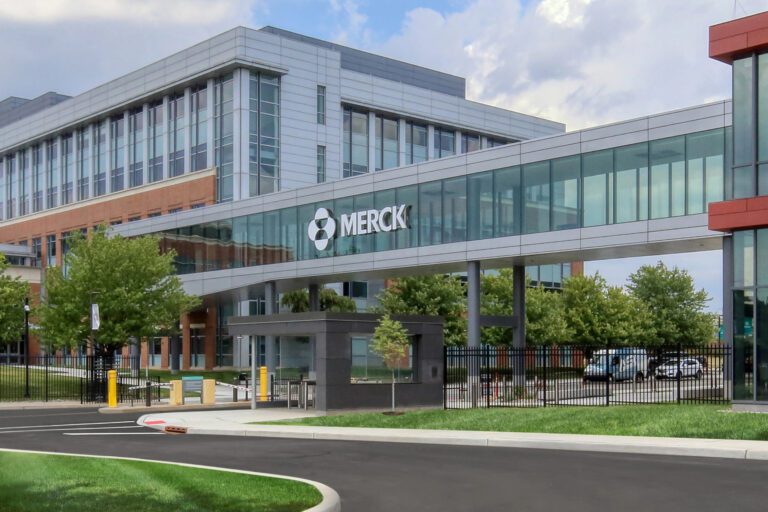
Merck & Co. has entered into an exclusive global licensing agreement with Shanghai-based biotechnology company SciBrunch Therapeutics Co., Ltd. for SPR2015, an investigational preclinical oral KRAS G12D (ON) inhibitor, in a transaction with a potential aggregate value of $2.13 billion.
Announced on September 28, 2026, the agreement gives Merck worldwide rights to develop, manufacture and commercialize SPR2015, a molecular glue-based inhibitor designed to target KRAS G12D, one of the most prevalent oncogenic mutations found in human cancers.
Under the agreement, SciBrunch will receive an upfront payment of $400 million and remains eligible for additional milestone payments tied to development, commercialization and other activities across multiple indications. The transaction has already closed.
The licensing agreement represents another investment by Merck in precision oncology and expands its portfolio of investigational targeted therapies addressing genetically defined cancer populations.

Merck Expands Precision Oncology Strategy Through SPR2015 Licensing
The acquisition of global development and commercialization rights to SPR2015 provides Merck with an opportunity to advance a novel approach to targeting KRAS-driven cancers.
KRAS mutations are associated with abnormal cellular signaling that promotes tumor growth and survival. Despite the importance of KRAS as an oncology target, developing effective therapies against different KRAS mutant variants has remained a significant challenge in drug discovery.
SPR2015 is being developed as a selective inhibitor of KRAS G12D in its active, GTP-bound state, commonly described as KRAS G12D (ON).
Unlike conventional approaches that target other molecular characteristics of KRAS, SPR2015 uses a molecular glue mechanism designed to facilitate selective inhibition of the mutant protein.
Merck described the agreement as complementary to its expanding precision-targeted oncology pipeline, highlighting the potential of SPR2015 to address one of the most prevalent mutant forms of KRAS found in human cancers.
George Addona, Senior Vice President, Discovery, Preclinical Development and Translational Medicine at Merck Research Laboratories, said the agreement supports the diversification of the company’s targeted oncology pipeline.
The transaction also reflects Merck’s continued interest in acquiring innovative early-stage assets with potential applications across multiple cancer indications.
$400 Million Upfront Payment and $2.13 Billion Potential Deal Value
The financial structure of the Merck-SciBrunch agreement includes a substantial upfront payment alongside future performance-based milestones.
| Transaction component | Details |
|---|---|
| Licensee | Merck & Co. |
| Licensing partner | SciBrunch Therapeutics |
| Licensed asset | SPR2015 |
| Drug category | Oral KRAS G12D (ON) inhibitor |
| Development stage | Preclinical |
| Upfront payment | $400 million |
| Potential aggregate transaction value | $2.13 billion |
| Additional payments | Development, commercialization and other milestones |
| Geographic rights | Worldwide |
| Transaction status | Closed |
| Financial impact for Merck | $400 million pre-tax charge in Q3 2026 |
The $2.13 billion transaction value includes the $400 million upfront payment and potential future milestone payments. Therefore, the headline value represents the maximum potential financial commitment rather than an immediately payable amount.
For Merck, the company disclosed that the transaction will result in a pre-tax charge of $400 million, equivalent to approximately $0.13 per share, in its third-quarter 2026 GAAP and non-GAAP financial results.
The agreement provides SciBrunch with substantial upfront capital while transferring responsibility for global development, manufacturing and commercialization to Merck.
SPR2015: Investigational Molecular Glue KRAS G12D (ON) Inhibitor
SPR2015 is described as a potent and selective investigational preclinical molecular glue inhibitor targeting KRAS G12D.
The drug candidate is designed to address the active form of KRAS G12D, which plays an important role in cancer cell proliferation and survival.
KRAS is a member of the RAS family of proteins involved in regulating intracellular signaling pathways. Under normal physiological conditions, KRAS switches between active and inactive states, helping regulate cellular growth and other biological processes.
However, oncogenic mutations can disrupt this regulatory mechanism, resulting in persistent signaling that supports uncontrolled cell proliferation.
Understanding KRAS G12D Mutation
KRAS G12D results from the substitution of glycine with aspartate at position 12 of the KRAS protein.
This mutation alters the protein’s normal regulatory activity and contributes to continuous downstream signaling associated with cancer development and progression.
The mutation is particularly relevant in several major solid tumors, including pancreatic, colorectal and lung cancers.
SPR2015 is designed to selectively inhibit KRAS G12D while maintaining selectivity over wild-type KRAS, potentially providing a therapeutic approach that targets cancer-associated signaling while limiting unwanted effects on normal KRAS activity.
Importantly, the candidate remains at the preclinical development stage, and its safety and efficacy in humans have not yet been established.
Preclinical Findings Highlight Antitumor Activity of SPR2015
According to the announcement, SPR2015 has demonstrated encouraging preclinical activity across multiple experimental systems.
The reported findings include:
1. Nanomolar antiproliferative activity
SPR2015 demonstrated nanomolar antiproliferative activity across various KRAS G12D-mutant cancer cell lines.
This indicates that the compound showed biological activity at low concentrations in the tested laboratory models.
2. Selectivity over wild-type KRAS
The candidate reportedly maintained good selectivity over KRAS wild-type cells, an important characteristic for an inhibitor targeting a specific oncogenic mutation.
3. Antitumor activity in animal models
SPR2015 demonstrated compelling antitumor efficacy as a monotherapy across multiple cell-derived xenograft (CDX) and patient-derived xenograft (PDX) models.
These findings were reported in preclinical data presented at the 2026 American Association for Cancer Research (AACR) Annual Meeting.
CDX models use established cancer cell lines implanted into experimental animals, while PDX models involve tumor tissue derived from patients.
Both approaches are used in oncology drug discovery to evaluate potential antitumor activity before clinical development.
However, preclinical efficacy does not establish clinical benefit. Further studies will be required to determine whether the observed activity can translate into meaningful outcomes in patients.
Potential Application Across Multiple KRAS G12D-Driven Cancers
The development strategy for SPR2015 could have relevance across multiple solid tumor indications where KRAS G12D mutations contribute to disease progression.
SciBrunch specifically highlighted its commitment to developing therapies for patients with pancreatic, colorectal, lung and other major malignant tumors.
These cancer types represent important areas of investigation for KRAS-targeted drug development.
Pancreatic Cancer
Pancreatic cancer is one of the major oncology areas associated with KRAS mutations. The development of selective KRAS G12D inhibitors represents an investigational strategy for addressing cancers driven by this mutation.
Colorectal Cancer
KRAS mutations are also relevant in colorectal cancer, where molecular profiling can help identify genetically defined patient populations.
A selective KRAS G12D inhibitor could potentially support a mutation-specific treatment strategy if clinical studies establish its safety and effectiveness.
Lung Cancer
KRAS alterations are also associated with lung cancer, making KRAS-directed therapies an important area of precision oncology research.
SPR2015’s potential application in these indications will depend on subsequent clinical development and evaluation.
Important: The announcement does not establish approved indications or confirm clinical efficacy for SPR2015 in any of these cancer types. Its current reported development stage is preclinical.
SciBrunch Therapeutics: Strategic Partnership With Merck
SciBrunch Therapeutics, headquartered in Shanghai, China, was founded in late 2024.
The company focuses on developing small-molecule oncology therapeutics through its research capabilities in the RAS pathway.
Its founding team includes Dr. Tao Hu, founder, chairman and chief executive officer, and Dr. Yang Zhang, a medicinal chemist.
According to the company announcement, SciBrunch focuses on identifying innovative scientific approaches to clinically validated targets and developing differentiated therapeutic candidates.
The SPR2015 agreement represents a significant commercial milestone for the relatively young biotechnology company.
Through the licensing arrangement, SciBrunch will transfer global development, manufacturing and commercialization rights to Merck, allowing the candidate to advance under the resources and capabilities of an established global pharmaceutical company.
Tao Hu stated that the partnership recognizes SciBrunch’s research and development capabilities and the potential of SPR2015 to address unmet medical needs in oncology.
The transaction also provides SciBrunch with an opportunity to participate in the potential future value of SPR2015 through milestone-based payments.
What the Agreement Means for Merck’s Oncology Pipeline
The licensing of SPR2015 expands Merck’s investment in targeted oncology research, particularly in genetically defined cancer populations.
The agreement provides access to an investigational molecular glue-based approach against KRAS G12D, adding another potential mechanism to its oncology research portfolio.
Several strategic considerations emerge from the transaction:
Diversification of targeted oncology assets: SPR2015 adds a preclinical candidate directed against a specific oncogenic mutation to Merck’s research portfolio.
Access to differentiated technology: The molecular glue approach represents a distinct drug discovery strategy for targeting the active form of KRAS G12D.
Potential for multiple indications: The licensing agreement covers development across multiple indications, creating opportunities to investigate the candidate in different KRAS G12D-driven tumor types.
Global development rights: Merck assumes responsibility for worldwide development, manufacturing and commercialization, subject to the applicable development and regulatory requirements.
Early-stage pipeline investment: By securing SPR2015 at the preclinical stage, Merck gains access to a potentially differentiated oncology asset before clinical efficacy has been established.
The agreement does not guarantee successful clinical development or regulatory approval. Its future value will depend on the results of subsequent research, clinical trials and regulatory assessments.
Development Outlook: What Comes Next for SPR2015?
Following the completion of the transaction, Merck holds exclusive worldwide rights to develop, manufacture and commercialize SPR2015.
The next major development considerations will include:
- Further preclinical characterization of the candidate.
- Evaluation of safety, pharmacological properties and potential clinical dosing.
- Progression toward clinical development, subject to the necessary studies and regulatory requirements.
- Identification of appropriate patient populations and potential cancer indications.
- Evaluation of clinical safety, tolerability and antitumor activity.
- Assessment of its potential role within the broader KRAS-targeted oncology treatment landscape.
The announcement does not provide a clinical trial initiation date, anticipated regulatory submission timeline or projected commercialization date.
Consequently, the next development milestones remain subject to future disclosures from Merck.
Industry Implications: Continued Investment in KRAS-Targeted Oncology
The Merck-SciBrunch transaction illustrates the continued pharmaceutical industry interest in developing therapies against oncogenic RAS pathway alterations.
KRAS has historically presented challenges for targeted drug development because of its molecular structure and biological characteristics.
Advances in medicinal chemistry and protein-targeting strategies have expanded the approaches being investigated against different KRAS variants.
SPR2015 adds another investigational candidate to this evolving research area, specifically targeting KRAS G12D in its active state.
The deal also demonstrates the strategic importance of biotechnology-pharmaceutical partnerships in advancing early-stage oncology candidates.
For emerging biotechnology companies, licensing arrangements with global pharmaceutical companies can provide access to development infrastructure, manufacturing capabilities and commercial expertise.
For pharmaceutical companies, these transactions provide opportunities to diversify research portfolios and acquire promising assets developed through external innovation.
Nevertheless, the clinical significance of SPR2015 will ultimately depend on human clinical trial results rather than preclinical findings or transaction valuation.