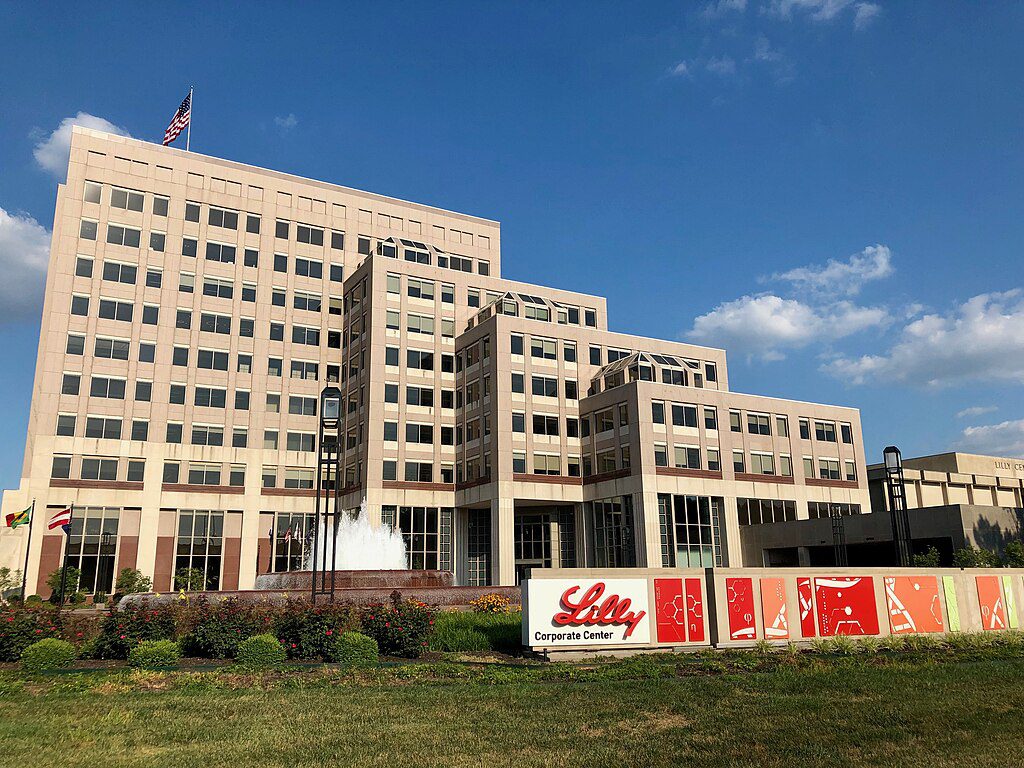
The Lilly Ajax Therapeutics acquisition marks a significant milestone in the treatment of rare blood cancers. Eli Lilly and Company (NYSE: LLY) recently announced a definitive agreement to acquire Ajax Therapeutics, Inc., a biotechnology firm dedicated to developing “Type II” JAK2 inhibitors. This strategic move, valued at up to $2.3 billion, positions Lilly at the forefront of precision medicine for myeloproliferative neoplasms (MPNs), including myelofibrosis and polycythemia vera.
The Strategic Rationale Behind the Lilly Ajax Therapeutics Acquisition
For years, patients with myelofibrosis have relied on Type I JAK2 inhibitors like ruxolitinib. While these therapies offer symptomatic relief, many patients eventually experience disease progression or resistance. The Lilly Ajax Therapeutics acquisition addresses this unmet need by introducing AJ1-11095, a first-in-class, oral Type II JAK2 inhibitor.
Unlike traditional therapies that bind to the active (Type I) conformation of the JAK2 protein, AJ1-11095 binds to the inactive (Type II) conformation. This unique mechanism is designed to provide deeper, more durable disease control and potentially reverse the “persistence” seen with current treatments. By more effectively targeting the underlying driver of MPNs, Lilly aims to improve long-term outcomes for patients who have failed prior therapies.
Learn More: Sun Pharma Organon Acquisition: A $11.75 Billion Move to Lead Global Women’s Health

Clinical Pipeline and Data Overview
The centerpiece of the Lilly Ajax Therapeutics acquisition is the lead candidate, AJ1-11095. Currently in Phase 1 clinical development (Study AJX-101), the drug is being evaluated in patients with myelofibrosis who have previously been treated with a Type I inhibitor.
Comparison of JAK2 Inhibitor Mechanisms
| Feature | Type I JAK2 Inhibitors (e.g., Ruxolitinib) | Type II JAK2 Inhibitor (AJ1-11095) |
| Binding Conformation | Active state of JAK2 kinase | Inactive state of JAK2 kinase |
| Primary Benefit | Symptomatic relief (spleen reduction) | Deep molecular response & durability |
| Resistance Profile | High; leads to disease persistence | Designed to overcome Type I resistance |
| Clinical Status | FDA Approved / Standard of Care | Phase 1 (Proof-of-concept data expected 2026) |
Clinical Data Parameters for AJ1-11095 (Phase 1 AJX-101)
| Parameter | Details |
| Trial ID | NCT06343805 |
| Patient Population | Relapsed/Refractory Myelofibrosis |
| Primary Endpoints | Safety, Tolerability, and Dose Selection |
| Secondary Endpoints | Pharmacokinetics (PK), Spleen Volume Reduction (SVR) |
| Key Milestone | Clinical Proof-of-Concept expected late 2026 |


Gilead Accelerates Global Access Strategy for Gilead Once-Yearly Lenacapavir in HIV Prevention Push
Gilead Sciences accelerates global access planning for investigational once-yearly lenacapavir, expanding royalty-free generic licensing across 120 high-incidence countries alongside Phase 3 PURPOSE 365 trials. […]
Novo – Anthropic Claude Science Partnership Targets Faster Drug Discovery
Novo and Anthropic announced a September 16, 2026 collaboration pairing Claude Science with Novo's R&D teams to tackle drug discovery challenges and strengthen AI-driven software […]

Amgen IMDELLTRA Monitoring Time Cut to 6-8 Hours as FDA Approves Label Update for ES-SCLC
The FDA has approved a label update cutting Amgen IMDELLTRA monitoring time for the first two doses from 22-24 hours to 6-8 hours, a change […]
Expanding the Oncology Pipeline
Lilly’s decision to finalize the Lilly Ajax Therapeutics acquisition follows a series of high-profile oncology deals, including the purchase of CrossBridge Bio and Kelonia Therapeutics. By integrating Ajax’s computational structure-based drug discovery platform, developed in collaboration with Schrödinger, Inc. Lilly is enhancing its ability to design highly selective molecules.