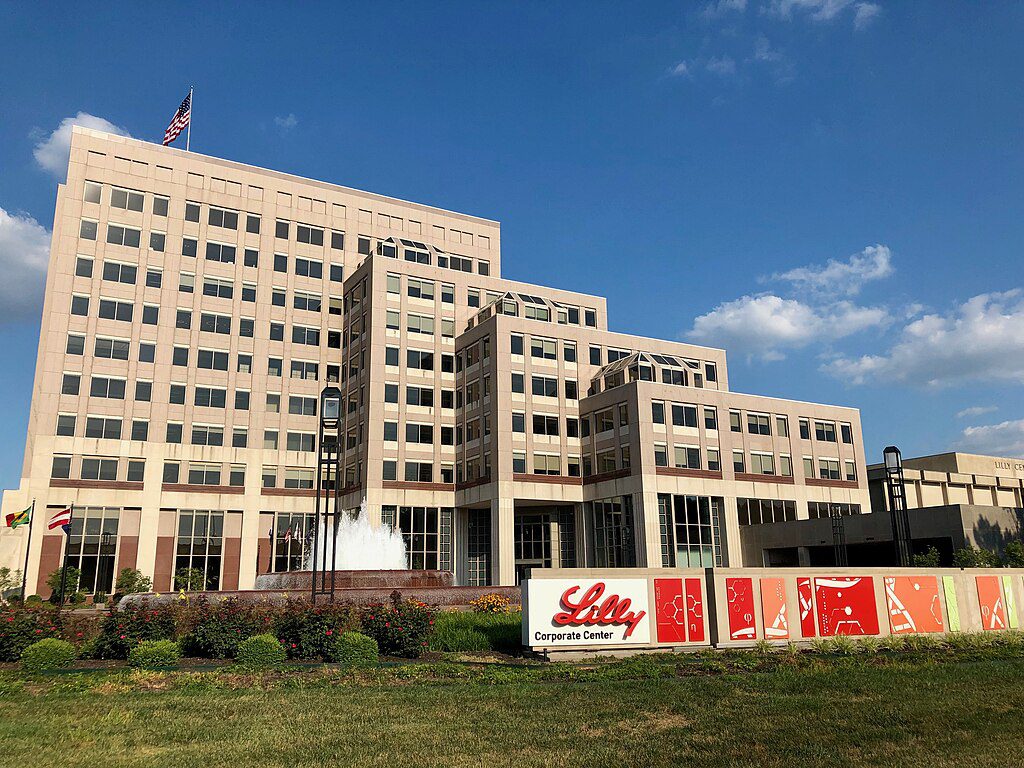
INDIANAPOLIS – Eli Lilly and Company announced that olomorasib, a breakthrough treatment for patients with a certain type of non-small cell lung cancer (NSCLC), has been designated as a Breakthrough Therapy by the U.S. Food and Drug Administration (FDA). Adult patients with unresectable advanced or metastatic non-small cell lung cancer (NSCLC) who have a KRAS G12C mutation and significant PD-L1 expression are eligible for this classification for first-line treatment.
The FDA’s decision is supported by positive results from the ongoing Phase 3 SUNRAY-01 trial and the Phase 1/2 LOXO-RAS-20001 trial, which show that olomorasib may offer a substantial therapeutic benefit for this patient population. The KRAS G12C mutation is a prevalent hereditary cause of lung cancer that has previously been challenging to treat. Olomorasib is a strong and highly selective second-generation inhibitor of this mutation.
Read More: Eli Lilly Reports Strong Q2 2025 Financial Results with 38% Revenue Growth
The Breakthrough Therapy designation recognizes the potential for olomorasib to be a meaningful treatment advance and highlights the continued unmet need for improved options for patients with KRAS G12C-mutant NSCLC, particularly in the first-line setting in combination with standard-of-care immunotherapy,
We look forward to presenting updated data from the olomorasib development program in significantly more patients and with longer follow-up at WCLC and continuing to investigate olomorasib in combination with immunotherapy-based regimens in a variety of treatment settings across the Phase 3 SUNRAY-01 and SUNRAY-02 studies.
David Hyman

Read More: Eli Lilly’s Once-Weekly Insulin Efsitora Alfa Shows Promising Results in Phase 3 Trials
At the forthcoming IASLC 2025 World Conference on Lung Cancer in Barcelona, Spain, the business intends to provide new safety and efficacy data for olomorasib. Detailed in two oral presentations at the conference, the presentation will feature integrated evaluations of olomorasib in combination with other medications.

MSD Oncology Pipeline Advances With First Phase 3 Data for Intismeran Autogene Plus KEYTRUDA and Sacituzumab Tirumotecan
The Merck oncology pipeline will present first-time Phase 3 results for intismeran autogene plus KEYTRUDA, sacituzumab tirumotecan and KEYTRUDA monotherapy in Madrid from Oct. 23-27, […]




Preliminary clinical evidence suggests that a drug may show significant improvement over current therapies on one or more clinically significant endpoints. This designation is meant to speed up the development and review of medications intended to treat serious or life-threatening diseases or conditions.
Last Modified: