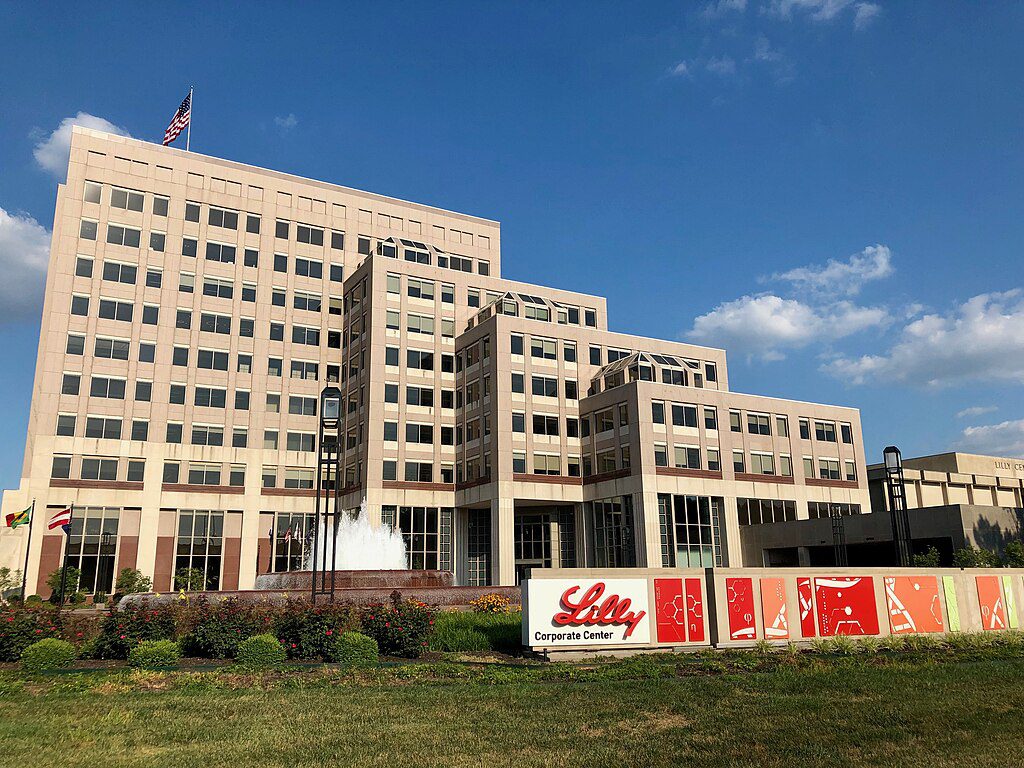
Eli Lilly and Company (NYSE: LLY) had a great third quarter of 2025, far exceeding Wall Street’s expectations. This was due to the huge global demand for its incretin portfolio, which includes the diabetes treatment Mounjaro and the obesity drug Zepbound. The pharmaceutical giant’s management increased its full-year 2025 guidance after the company released impressive financial results and concurrent advancements across its R&D pipeline.
Financial Highlights: A Quarter of Exceptional Growth
| Metric | Q3 2025 Result | Year-over-Year Change | Analyst Consensus |
| Revenue | $17.6 Billion | +54% | ~16.07 Billion |
| Non-GAAP EPS | $7.02 | Significant Increase | ~$5.90 |
Due to a favourable product mix, the company’s non-GAAP gross margin also increased, rising to 83.6%. Its full-year outlook increased significantly as a result of this financial strength:
- The full-year revenue guidance was increased to between $63.0 billion and $63.5 billion.
- Non-GAAP EPS Guidance for the Entire Year: increased to between $23.00 and $23.70.
Read More: Eli Lilly Reports Strong Q2 2025 Financial Results with 38% Revenue Growth
Product Performance: Incretin Portfolio Dominates Market
The twin treatments based on the incretin mechanism were the quarter’s top performers:
- Mounjaro (tirzepatide) Revenue: The diabetes medication brought in $6.52 billion globally, a remarkable 109% rise from the previous year.
- Zepbound (tirzepatide) Revenue: The obesity treatment made about $3.57 billion, making it a market leader in weight loss. More than half of all new prescriptions for obesity in the US are currently filled by Zepbound.
For the fifth consecutive quarter, Lilly’s market share grew due to its combined strength in the larger incretin analogues market, solidifying its position as the industry leader. Other important products outside of the incretin portfolio demonstrated strong growth:
- Verzenio (abemaciclib): Volume growth outside of the United States drove a 7% increase in revenue to $1.47 billion.
- Jaypirca (pirtobrutinib): Contributed to the growth of the oncology segment with a 61% increase in U.S. prescriptions compared to Q3 2024.
MSD Oncology Pipeline Advances With First Phase 3 Data for Intismeran Autogene Plus KEYTRUDA and Sacituzumab Tirumotecan
The Merck oncology pipeline will present first-time Phase 3 results for intismeran autogene plus KEYTRUDA, sacituzumab tirumotecan and KEYTRUDA monotherapy in Madrid from Oct. 23-27, […]
Pipeline Momentum and Capacity Expansion
As the company makes significant investments in its potential future drug candidates, Lilly keeps pushing its R&D pipeline, with R&D costs rising by 27%.
- Orforglipron Advance: The company reported that orforglipron, an experimental oral GLP-1 receptor agonist, had shown encouraging outcomes in four more Phase 3 trials. In one trial, it outperformed oral semaglutide head-to-head. By the end of 2025, Lilly intends to submit to international regulatory bodies for the treatment of obesity.
- Lilly’s oncology portfolio was expanded when the U.S. FDA approved Inluriyo (imlunestrant) for the treatment of advanced or metastatic breast cancer with ER+, HER2-, or ESR1 mutations.
- Alzheimer’s Progress: Kisunla was approved for sale in Europe for the treatment of early-stage Alzheimer’s disease symptoms.
Lilly is making large capital investments to increase manufacturing capacity in order to meet the extraordinary demand for Mounjaro and Zepbound. Along with a $1.2 billion expansion of its current facility in Puerto Rico, the company announced plans to add new facilities in Virginia and Texas to increase its production footprint. These calculated expenditures are essential to guaranteeing that the world’s supply can satisfy the rapidly increasing demand for patients.
Last Modified: