SAN FRANCISCO, Jan. 12, 2026 — In a landmark move that signals a new era for the pharmaceutical industry, NVIDIA and Eli Lilly and Company (Lilly) today announced the launch of a first-of-its-kind AI co-innovation lab. Unveiled at the J.P. Morgan Healthcare Conference, the partnership includes a joint investment of up to $1 billion over the next five years to reinvent how medicines are discovered, developed, and manufactured.
The new laboratory, based in the San Francisco Bay Area, will serve as a high-tech hub where Lilly’s domain scientists in biology and medicine will work side-by-side with NVIDIA’s leading AI model builders and engineers. The facility is expected to open its doors by late March 2026.
Building a “Blueprint for Discovery”
The collaboration aims to address the pharmaceutical industry’s most persistent challenges: the high cost, slow pace, and frequent failure of drug discovery. By combining Lilly’s 150 years of scientific data with NVIDIA’s leadership in accelerated computing, the companies intend to create a “continuous learning system.”
AI is transforming every industry, and its most profound impact will be in life sciences,
NVIDIA and Lilly are bringing together the best of our industries to invent a new blueprint for drug discovery one where scientists can explore vast biological and chemical spaces in silico before a single molecule is ever made in a lab.
Jensen Huang

Read More: Eli Lilly Partners with NVIDIA to Build Pharma’s Most Powerful AI Supercomputer
The Tech Behind the Transformation
The co-innovation lab will leverage a sophisticated technological stack to drive its research:
- Next-Gen Infrastructure: The lab will be built on the NVIDIA Vera Rubin architecture and utilize the NVIDIA BioNeMo platform, an end-to-end development environment for biological AI.
- Agentic Wet Labs: The initiative will pioneer “lab-in-a-loop” workflows, where AI agents plan and execute experiments in physical “wet labs” and feed results back into computational “dry labs” for real-time model refinement.
- Physical AI and Robotics: Beyond discovery, the partnership will apply NVIDIA’s Omniverse (digital twins) and Isaac (robotics) platforms to modernize manufacturing. This could potentially reduce the cost of complex medicine production, such as cell therapies, by up to 70%.
Expanding the “AI Factory”
This announcement builds upon a previous collaboration between the two giants. In October 2025, Lilly announced the deployment of the pharmaceutical industry’s most powerful AI supercomputer—an NVIDIA DGX SuperPOD powered by more than 1,000 Blackwell-based GPUs.
The new co-innovation lab will expand this “AI factory,” focusing on the generation of proprietary high-quality data to train foundation models for biology and chemistry. Lilly also plans to share select insights through its TuneLab platform, a federated AI hub that allows the broader biotech ecosystem to access advanced discovery tools while maintaining data privacy.
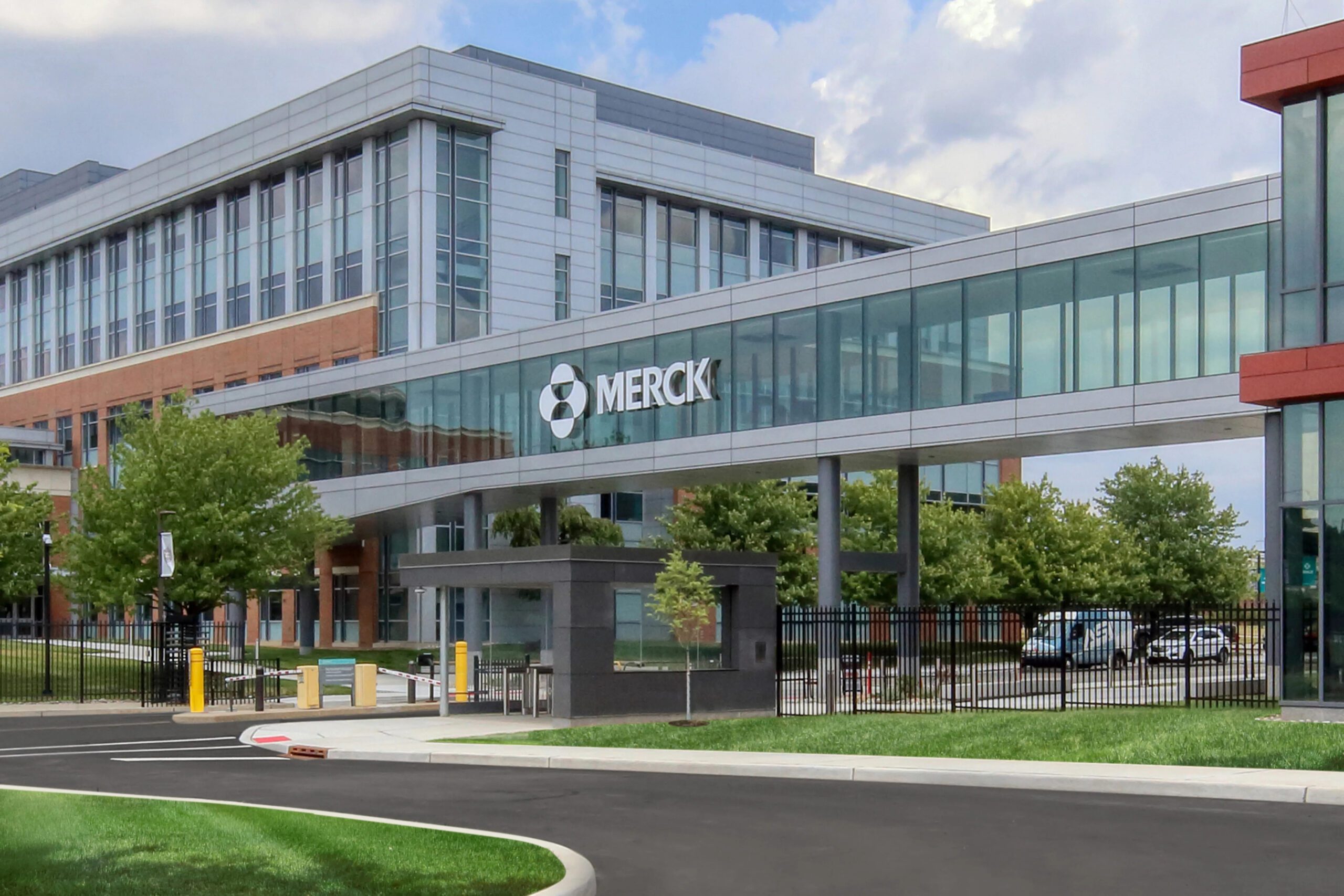
MSD Oncology Pipeline Advances With First Phase 3 Data for Intismeran Autogene Plus KEYTRUDA and Sacituzumab Tirumotecan
The Merck oncology pipeline will present first-time Phase 3 results for intismeran autogene plus KEYTRUDA, sacituzumab tirumotecan and KEYTRUDA monotherapy in Madrid from Oct. 23-27, […]



Looking Ahead
The partnership marks a shift in the pharmaceutical landscape from traditional trial-and-error methods toward “intentional design.” As drug developers face increasing pressure to shorten development cycles and move away from animal testing, the NVIDIA-Lilly lab represents a significant bet on the power of “Silicon-to-Biology” innovation.
Work at the South San Francisco site is slated to begin early this year, with both companies allocating dedicated resources to staff the lab with top-tier talent from both the tech and life sciences sectors.
Last Modified: