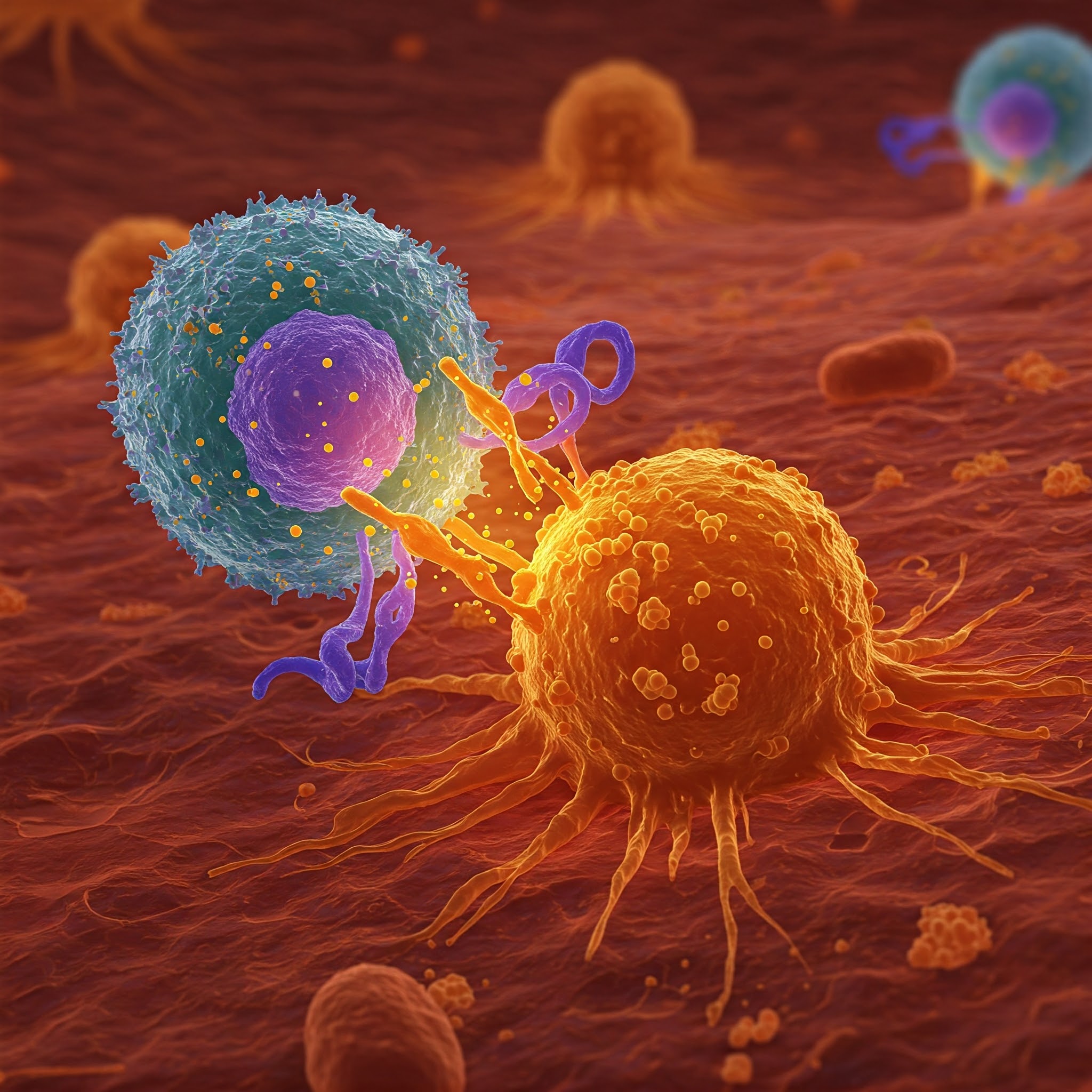
Researchers at The Ohio State University Comprehensive Cancer Center (OSUCCC) have discovered a major factor that contributes to the failure of cancer immunotherapy. The study, which was released on October 1, 2025, identifies a recently identified stress route in T-cells as the reason of their fatigue, which is a significant barrier to effective cancer treatment.
T-Cell Exhaustion and Misfolded Proteins
Researchers from OSUCCC – Ames found that tired T-cells are overloaded with misfolded proteins, which sets up TexPSR, a proteotoxic stress response. TexPSR speeds up the creation of proteins, in contrast to normal cellular stress responses that slow it down. As a result, the T-cells develop harmful accumulations of misfolded proteins and poisonous aggregates that resemble the amyloid plaques seen in Alzheimer’s disease. In essence, this buildup poisons the T-cells, making it more difficult for them to combat malignancies.
Promising Preclinical Results
Under the direction of Dr. Zihai Li, the study demonstrated that in preclinical models, inhibiting the primary drivers of this TexPSR pathway restored the function of these worn-out T-cells and significantly increased the effectiveness of cancer immunotherapy. This discovery’s broad application is demonstrated by the fact that it has been validated across multiple cancer types, including liver, bladder, and lung cancer.

Clinical Significance
To further emphasize the therapeutic significance of this discovery, the study team also discovered a connection between poor responses to immunotherapy and elevated levels of TexPSR in T-cells from cancer patients. A new avenue for developing more effective cancer immunotherapy treatments is made possible by this new understanding of T-cell depletion.
Last Modified: